About SKYWARN®
The SKYWARN® program is a loosely organized nationwide group of volunteers who are trained to recognize and report severe weather events to the National Weather Service with the goal of saving lives by improving warning accuracy. Since the 1970's, ordinary citizens across the country have given their time and skills to the SKYWARN® program and amateur ("ham") radio has played an important role in the collection of these reports.
SKYWARN® and You!
Scroll through the presentation to learn about the SKYWARN® Program and how you can contribute.
SKYWARN® and Amateur Radio in the Central Rockies and High Plains
The SKYWARN® program is a nationwide network of trained volunteers who report severe weather to the National Weather Service (NWS). These dedicated individuals — many of whom are licensed amateur radio operators — serve as the "eyes and ears" of meteorologists, providing on-the-ground information that improves the timeliness and accuracy of warnings. Since the 1970s, SKYWARN® spotters have helped save countless lives by reporting tornadoes, flash floods, hail, damaging winds, and winter weather impacts as they happen.
Amateur radio remains at the heart of this effort, bridging gaps when phone and internet services fail. Using local and regional repeaters, linked systems, and digital modes, ham operators ensure that real-time reports reach forecasters even during power outages or cell tower disruptions. Their contributions turn raw radar data into actionable, life-saving information. The Colorado Severe Weather Network aims to be the backbone for the critical reports from amateur radio operators to the National Weather Service.
SKYWARN® and amateur radio have developed a unique partnership built on reliability and community service. When severe weather strikes, amateur radio operators:
• Relay spotter reports directly to National Weather Service offices.
• Maintain radio nets that collect and verify information in real time.
• Provide communication support to emergency management and public safety agencies.
• Assist with community outreach and SKYWARN® training events.
Many SKYWARN® radio nets operate on VHF and UHF frequencies, with some regions also linking across statewide repeater networks or digital systems such as DMR, D-STAR, or EchoLink. Operators are trained to provide clear, concise, and factual weather reports — a skill set that directly supports meteorologists and warning coordination teams.
Regional Coverage Across the Mountain West
This coordination happens through a network of NWS Forecast Offices, each responsible for a defined County Warning Area (CWA). Within and between these areas, SKYWARN® teams and amateur radio groups work together to support local communities.
| CWA | Office | States | Counties | Population (2024) | Est. Hams | Notes |
|---|---|---|---|---|---|---|
| GJT | Grand Junction | CO, UT | 22 | 613,202 | 2,544 | Western CO & eastern UT |
| BOU | Denver/Boulder | CO | 22 | 4,243,557 | 13,488 | Front Range urban corridor |
| GLD | Goodland | CO, KS, NE | 19 | 74,832 | 211 | High Plains, tri‑state area |
| PUB | Pueblo | CO | 16 | 1,114,959 | 3,467 | Southern & central CO |
| CYS | Cheyenne | WY, NE | 15 | 266,270 | 1,044 | Southeast WY & W Nebraska |
| SLC | Salt Lake City | UT, WY | 27 | 3,474,909 | 12,923 | Wasatch Front & adjacent areas |
| LBF | North Platte | NE | 27 | 281,773 | 213 | West‑central Nebraska |
| ALL | Totals | 5 | 148 | 10,069,502 | 33,890 | 0.0033% |
NWS Grand Junction (GJT)
Covering western Colorado and eastern Utah, the Grand Junction Forecast Office manages one of the most geographically diverse CWAs in the country. Local ham clubs from Delta, Montrose, and Grand Junction frequently host SKYWARN® nets during significant storms, offering critical reports from mountain passes and remote valleys. Winter weather spotters in this region are especially vital due to the challenges of radar coverage in complex terrain.
NWS Boulder (BOU)
The Boulder Forecast Office oversees north-central and northeast Colorado — including the Front Range, Denver metro area, and eastern plains. BOU SKYWARN® volunteers track everything from fast-developing thunderstorms to damaging hail and tornadoes. The office maintains strong ties with the Colorado Severe Weather Net, operated by amateur radio teams who provide direct communication links to forecasters during severe weather events.
NWS Goodland (GLD)
Situated on the Kansas-Colorado border, the Goodland Forecast Office covers northwest Kansas, southeast Nebraska, and parts of eastern Colorado. Ham operators in this area play an essential role in monitoring the large rural territory where cell service can be sparse. The office routinely coordinates with the many Amateur Radio Clubs in the High Plains to activate severe weather nets and relay timely reports to meteorologists and emergency agencies.
NWS Pueblo (PUB)
The Pueblo Forecast Office manages southern and southeast Colorado, an area affected by both severe thunderstorms in the plains and heavy snow in the high country. PUB SKYWARN® spotters — many operating through regional clubs like the Pueblo VE Group and Pikes Peak Radio Amateur Association — provide dual coverage for severe convective and winter events. Radio-based coordination ensures spotters can reach NWS forecasters even when communication networks are overloaded.
NWS Cheyenne (CYS)
Serving southeast Wyoming, the western Nebraska Panhandle, and parts of northern Colorado, the Cheyenne Forecast Office collaborates with local amateur radio operators via the Wyoming and Nebraska repeater networks. SKYWARN® nets here are activated during high-wind, thunderstorm, and winter weather events, with spotters frequently reporting from mountain ridges and wide-open plains.
NWS Salt Lake City (SLC)
The Salt Lake City Forecast Office oversees much of Utah and parts of south-central Idaho. Its SKYWARN® partners include several active amateur radio clubs like the Utah VHF Society and Utah Amateur Radio Club. Because radar coverage can be limited in the rugged terrain, reliable spotter reports from ham operators are vital to confirm severe wind, hail, and flood events in real time.
Training and Participation
All volunteers are encouraged to participate in SKYWARN® Spotter Training, which is offered for free by each NWS Forecast Office. Classes are available both in-person and online, typically divided into Basic and Advanced levels. Topics include identifying severe weather features, proper reporting methods, and safety procedures.
Once trained, spotters may participate in radio nets or submit reports through official online forms and phone hotlines. Amateur radio operators can also join the Colorado Severe Weather Network, which we coordinate technical and communication support for NWS operations throughout Colorado and beyond.
Getting Involved
Becoming a SKYWARN® spotter or amateur radio operator is easier than you might think:
1. Take a Basic SKYWARN® Class. Visit your local NWS office website (GJT, BOU, GLD, PUB, CYS, or SLC) for the schedule.
2. Get your Amateur Radio License. Amateur radio is accessible to everyone — with online study guides, community classes, and FCC testing available year-round.
3. Join Local Nets. Once trained and licensed, you can participate in regular practice nets or help during severe weather activation.
4. Stay Connected. Follow your NWS office and local ham clubs on social media for alerts, training dates, and spotter network info.
Whether you're a lifelong weather enthusiast or a new ham curious about public service, SKYWARN® is your chance to make a tangible difference in your community. Your eyes and your radio reports are essential links in the chain that helps protect lives and property across the Rocky Mountain and High Plains region.
NWS Mission
Provide weather, water and climate data, forecasts, warnings, and impact-based decision support services for the protection of life and property and enhancement of the national economy.
NWS Vision
A Weather-Ready Nation: Society is prepared for and responds to weather, water, and climate-dependent events.
Weather-Ready Nation Story
Accurate weather forecasts do not always result in a good outcome. The National Weather Service (NWS) learned this difficult... Read more
Who we are
NWS has played a key role in protecting American lives and properties for over a century. The timely provision of reliable weather, water, climate, and environmental information has supported the Nation's social and economic development. NWS offices in communities across the United States and its territories, supported by regional and national centers, provide the authoritative information needed by Americans, including national, regional, state, tribal, and local authorities, to plan, prepare, mitigate, and respond to natural and human-caused events... Read more

Forecasts and Services
NWS provides weather, water, and climate forecasts and warnings for the United States, its territories, adjacent waters and ocean areas, for the protection of life and property and the enhancement of the national economy. These services include Forecasts and Observations, Warnings, Impact-based Decision Support Services, and Education in an effort to build a Weather-Ready Nation. The ultimate goal is to have a society that is prepared for and responds to weather, water and climate events... Read More

Science and Technology
Advances in science and technology are essential to meeting the National Weather Service mission to protect lives and property and enhance the national economy. Each day, the NWS is working towards integrating critical science advancements, research, technology, and innovation across the agency to help protect lives and property in your local community... Read more
NWS Partners
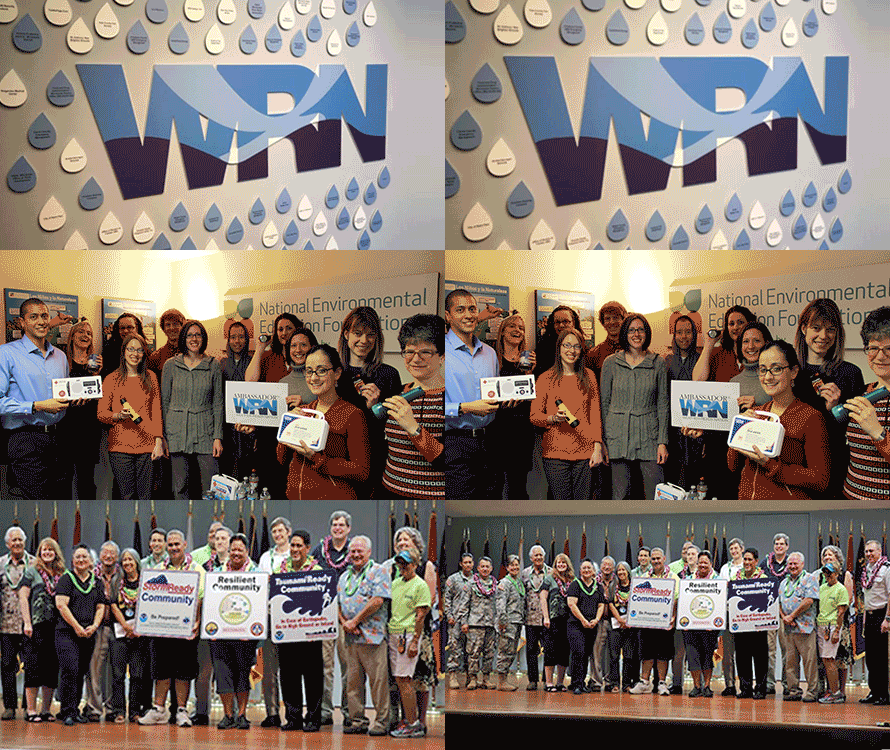
NWS is an organization that relies heavily on science, partnerships, and ties to local communities to successfully provide weather, water, and climate data, forecasts and warnings for the protection of life and property and the enhancement of the national economy. The NWS works with many partners, including those from national and local government, members of the weather enterprise, Weather-Ready Nation Ambassadors, and Academia to help educate people in all... Read More
